.png)
In this article
Modern Bamboo Fencing: Four Design Trends Driving Demand in 2026-2027
Outdoor fencing is changing direction. The plain white vinyl panel and the heavy solid boundary wall are giving way to materials that look natural, work with the garden and respect the environment. The modern bamboo fence sits at the center of that shift. Buyers across Europe and North America are asking for it in new styles, new tones and new combinations with other materials.
This guide walks through four design trends shaping 2026-2027, based on how architects, landscape designers and garden retailers are actually specifying fencing. Each trend maps to specific bamboo and natural-fiber products, so distributors can see what to stock and why. If you follow only one takeaway, let it be this: the modern bamboo fence is no longer a niche product. It is a mainstream choice across residential and commercial outdoor design.
Trend 1: Mixed-Material Frames and Bamboo Fence Slats
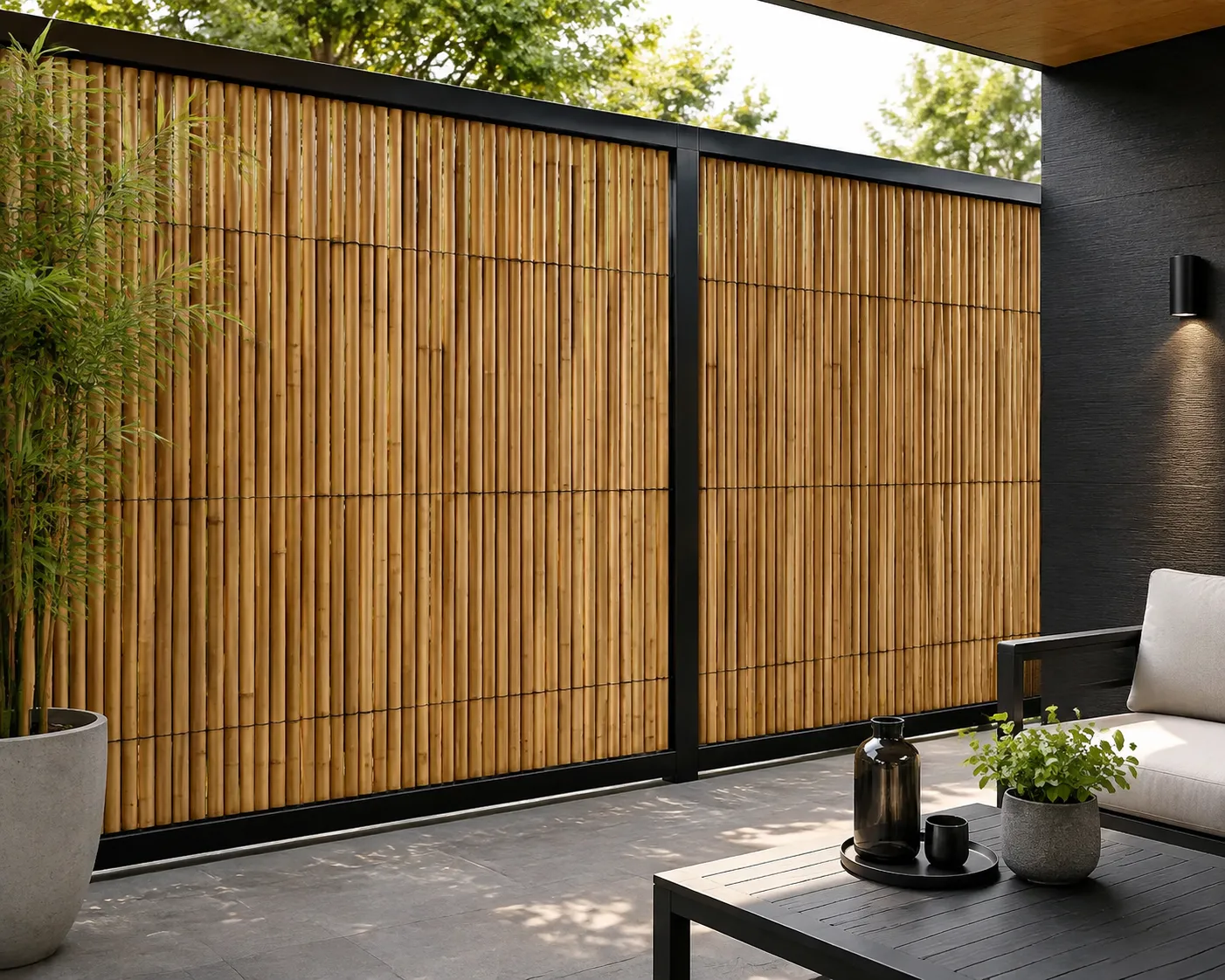
The strongest direction in contemporary fencing is the combination of modern frames with natural fillers. Black matte aluminum frames paired with bamboo slats create architectural contrast that reads as high-end, not rustic. The vertical lines of a threaded bamboo fence fit this style perfectly. Whole poles wired with steel give a clean rhythm that slides into an aluminum frame system without looking out of place.
For distributors, this trend means the modern bamboo fence is no longer just a tropical option. It is a structural design element for modern patios, commercial terraces and upscale residential projects. Framing systems turn a simple roll of bamboo into a specified architectural product, and buyers are learning to ask for it by name.
Trend 2: Rewilding and Biophilic Fencing
The second trend is a shift in values. Vinyl and plastic fencing are losing ground as buyers apply ESG thinking to their purchases. Fast-renewable materials such as bamboo, willow, fern and bark answer the same questions plastic cannot: where it grew, how it was made and what happens at the end of its life. Every one of those answers favors a modern bamboo fence over a synthetic panel.
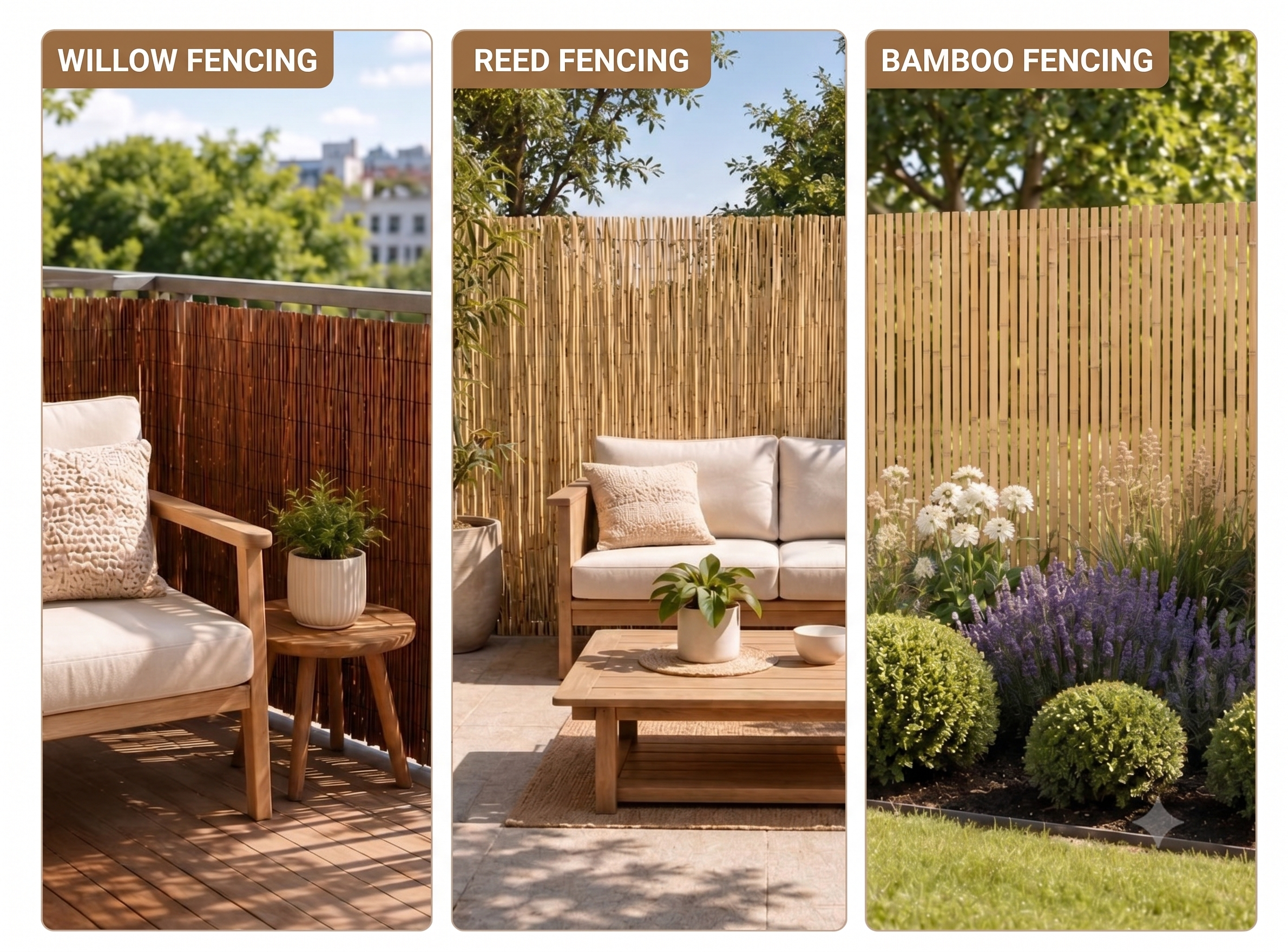
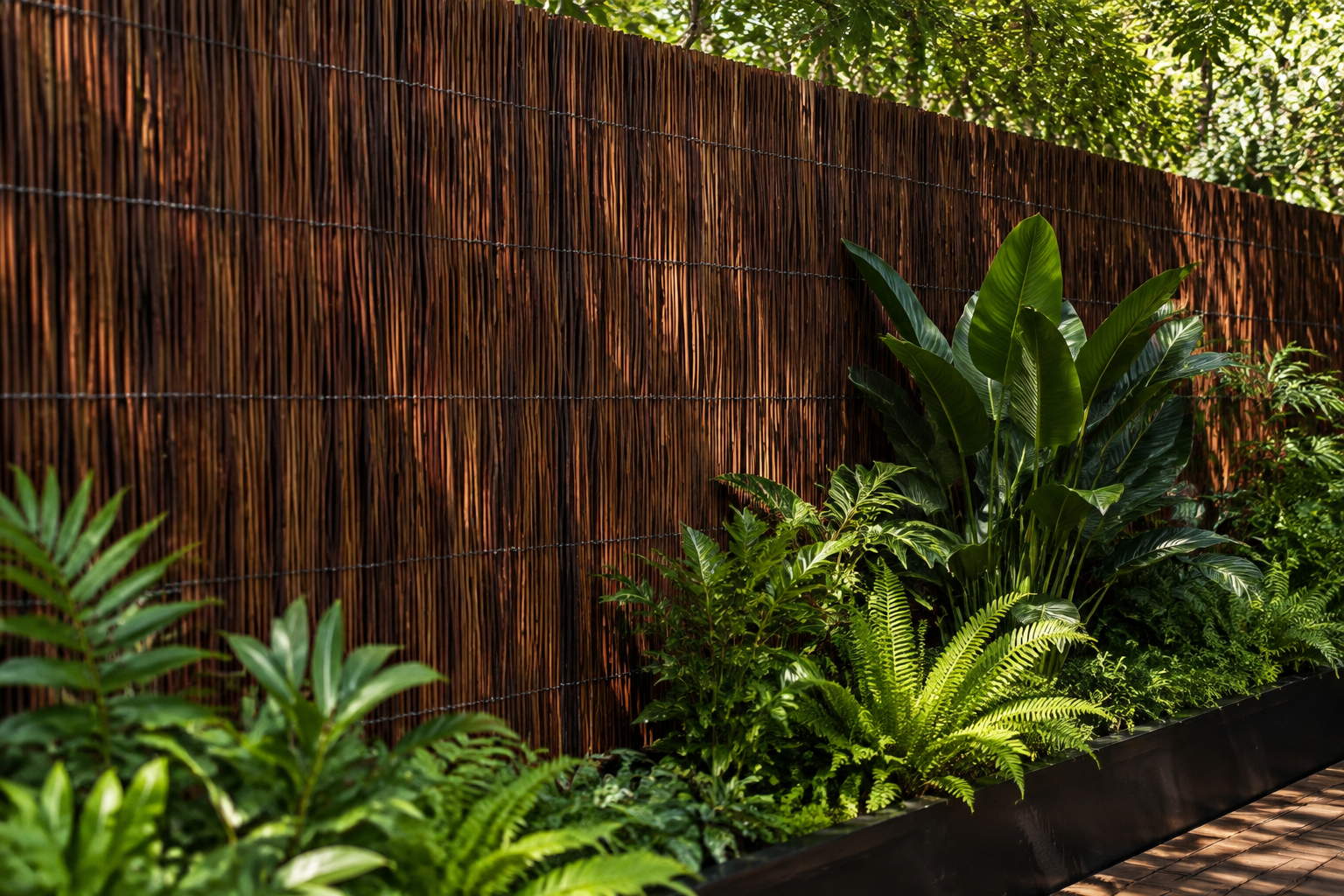
This is the natural home of the split bamboo screen, a high cost-performance option for eco-conscious projects on a budget. It also lifts darker natural products: black fern fence, valued by biophilic architects as a plant background wall, and double-sided bark fence, a premium alternative to vinyl that has no bad side to hide. Willow and heather fencing, long favorites in European gardens, fit the same organic direction. Together they give retailers a complete plastic-free fencing story.
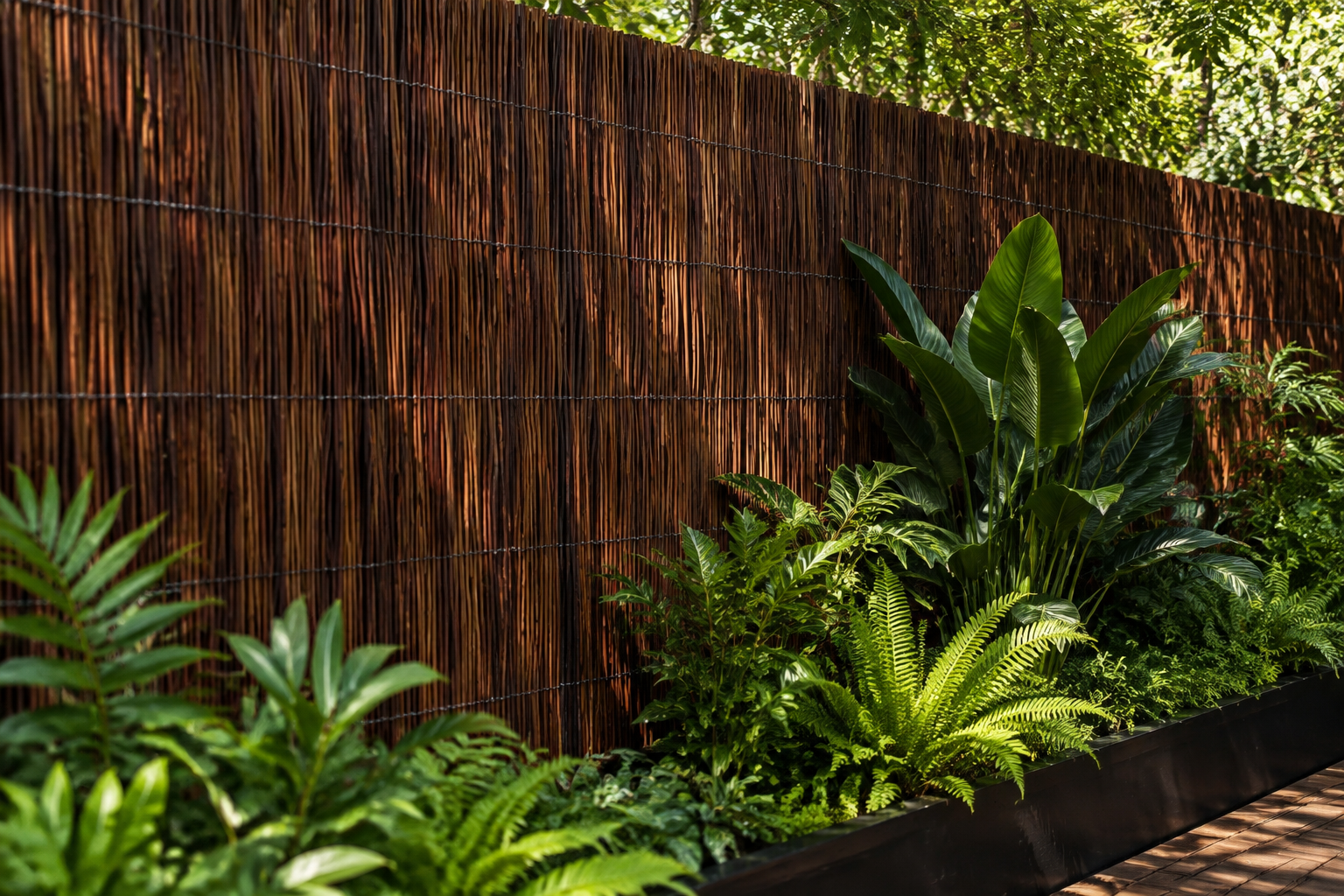
Trend 3: Warm Tones and Black Bamboo Micro-Zones
Cool gray is stepping aside in favor of warm taupe, clay and dark tones. Gardens are being divided into functional micro-zones: a hot tub corner, a seating pocket, a trash enclosure, a dining space. Each zone needs its own screening, and color is the tool designers use to separate them.
Black bamboo rolls deliver exactly this. Their natural dark-gold to black tone brings a luxury feel that fits high-end spa screening and statement micro-zones. Bamboo edging and extensible bamboo lattice complete the picture, defining garden borders and giving climbing plants a structured home. Warm-toned products are pulling ahead of gray-toned alternatives in retail sales, and dark bamboo is the tone buyers ask for first.
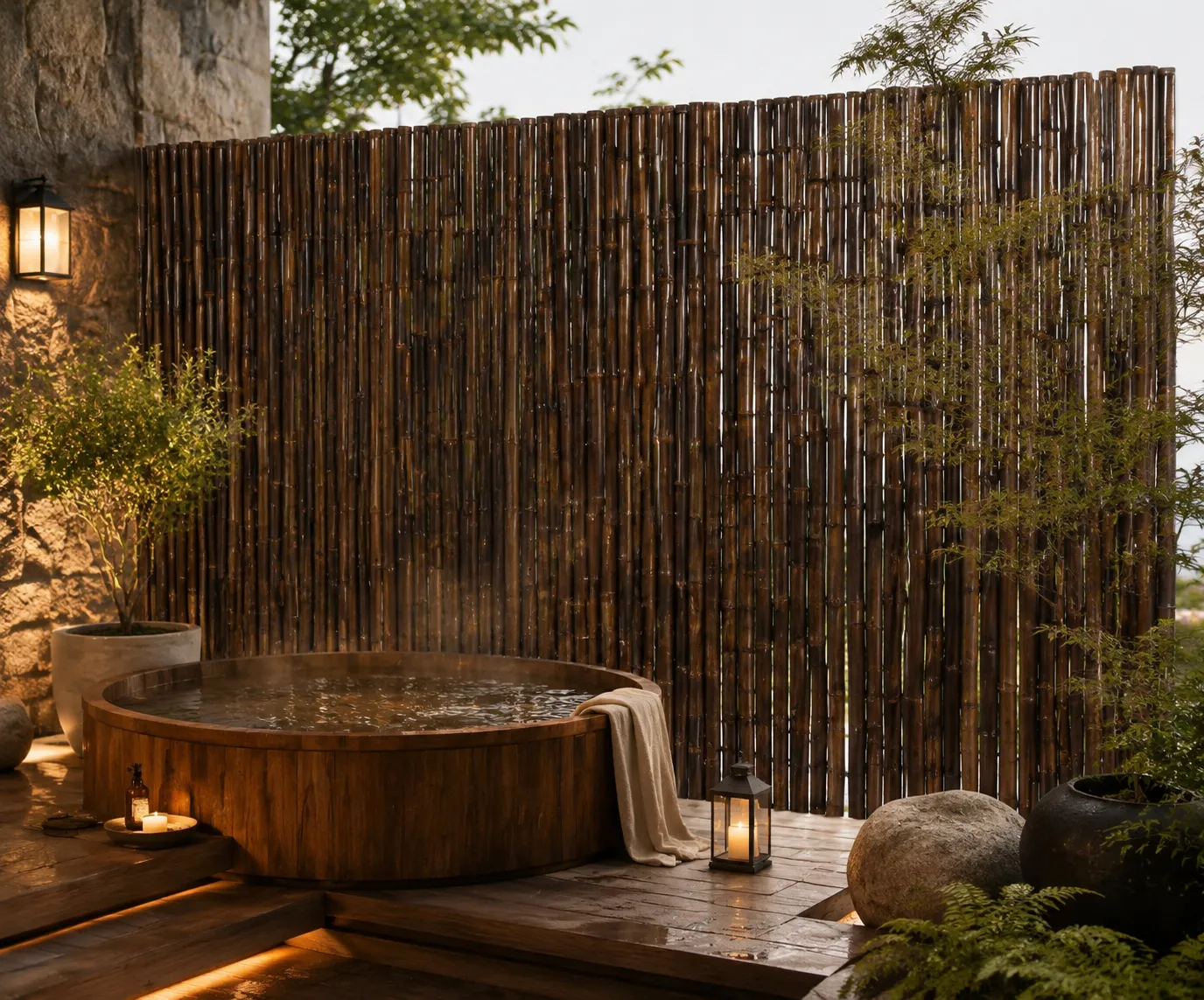
Trend 4: Smart Privacy with Airflow
The fourth trend rejects the suffocating solid wall. Homeowners and commercial clients want privacy balanced with light and ventilation. Fencing should screen the view without boxing people in. Louvered and open-weave constructions answer this need better than any solid panel.
For instant privacy with zero maintenance, the willow trellis with artificial leaf fence is the standout product. It gives urban balconies and small gardens immediate screening while letting air pass through freely. Willow and reed constructions with natural gaps serve the same purpose in more permanent settings. The principle is simple: screen the sightline, keep the airflow.
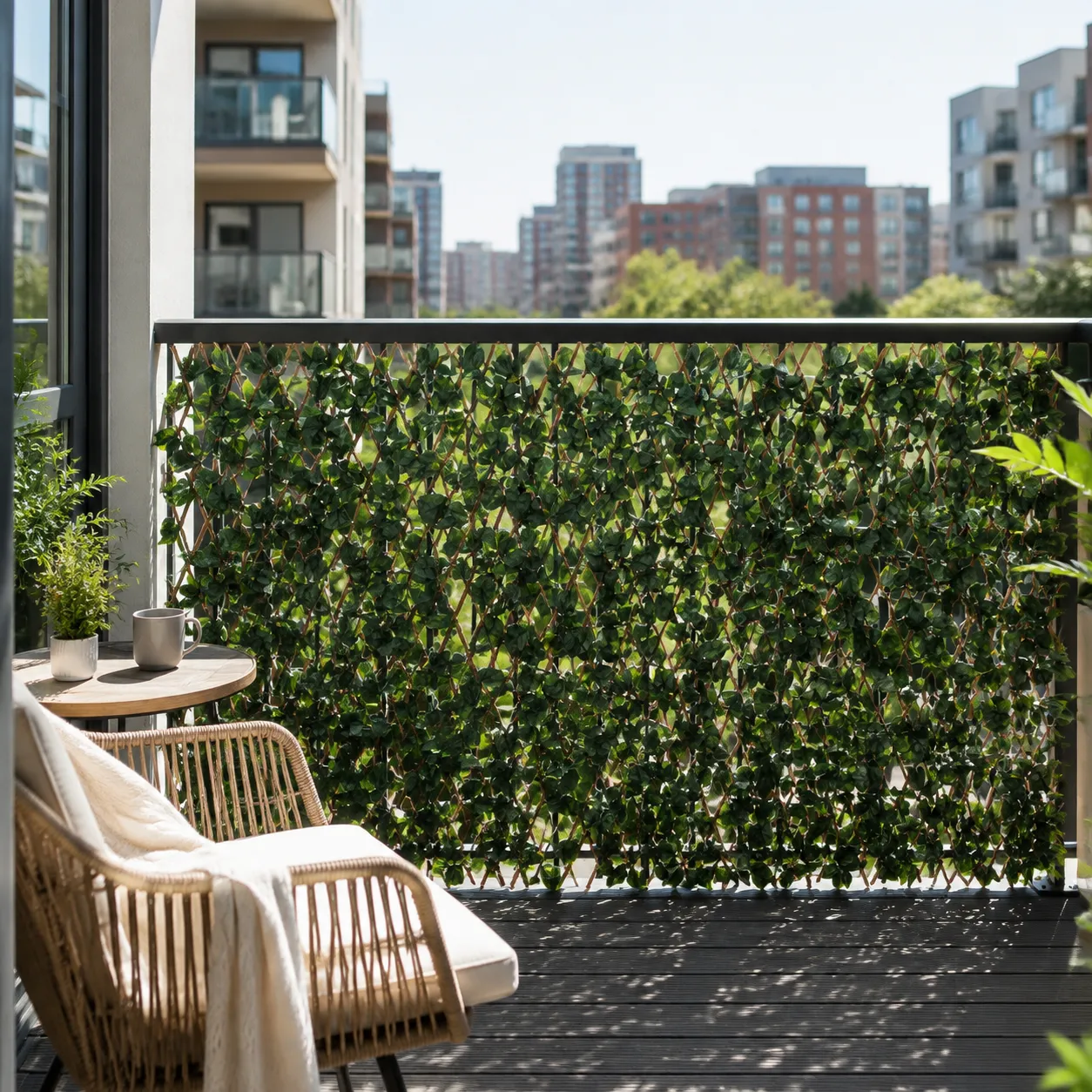
How Trends Map to Bamboo Fence Products
The table below matches each trend to the products that serve it best. Use it as a quick reference when planning stock for the coming season.
|
2026-2027 Trend |
Best-Fit Products |
Why It Fits |
|
Mixed-Material & Framed |
Strong vertical lines for aluminum frame integration |
|
|
Rewilding, ESG & Biophilic |
Split Bamboo Screen, Black Fern Fence, Bark Fence, Willow & Heather |
Fast-renewable, natural, plastic-free screening |
|
Warm Earth Tones & Micro-Zoning |
Black Bamboo Rolls, Bamboo Edging |
Dark luxury tone for spa zones and garden borders |
|
Smart Privacy & Airflow |
Instant privacy with light and ventilation |
What Buyers Should Watch
Three practical points follow from these trends. First, dark tones are rising. Black bamboo rolls and black fern are moving from niche to mainstream, so a distributor that ignores them is leaving money on the table. Second, framing matters. A modern bamboo fence that works inside aluminum frame systems gets specified more often than a standalone panel. Third, the story sells. ESG-minded buyers choose products with a clear origin and treatment story, which favors suppliers who document their process.
For more background on bamboo as a plant and material, the bamboo covers the family and its uses.
Talk to GBL Bamboo
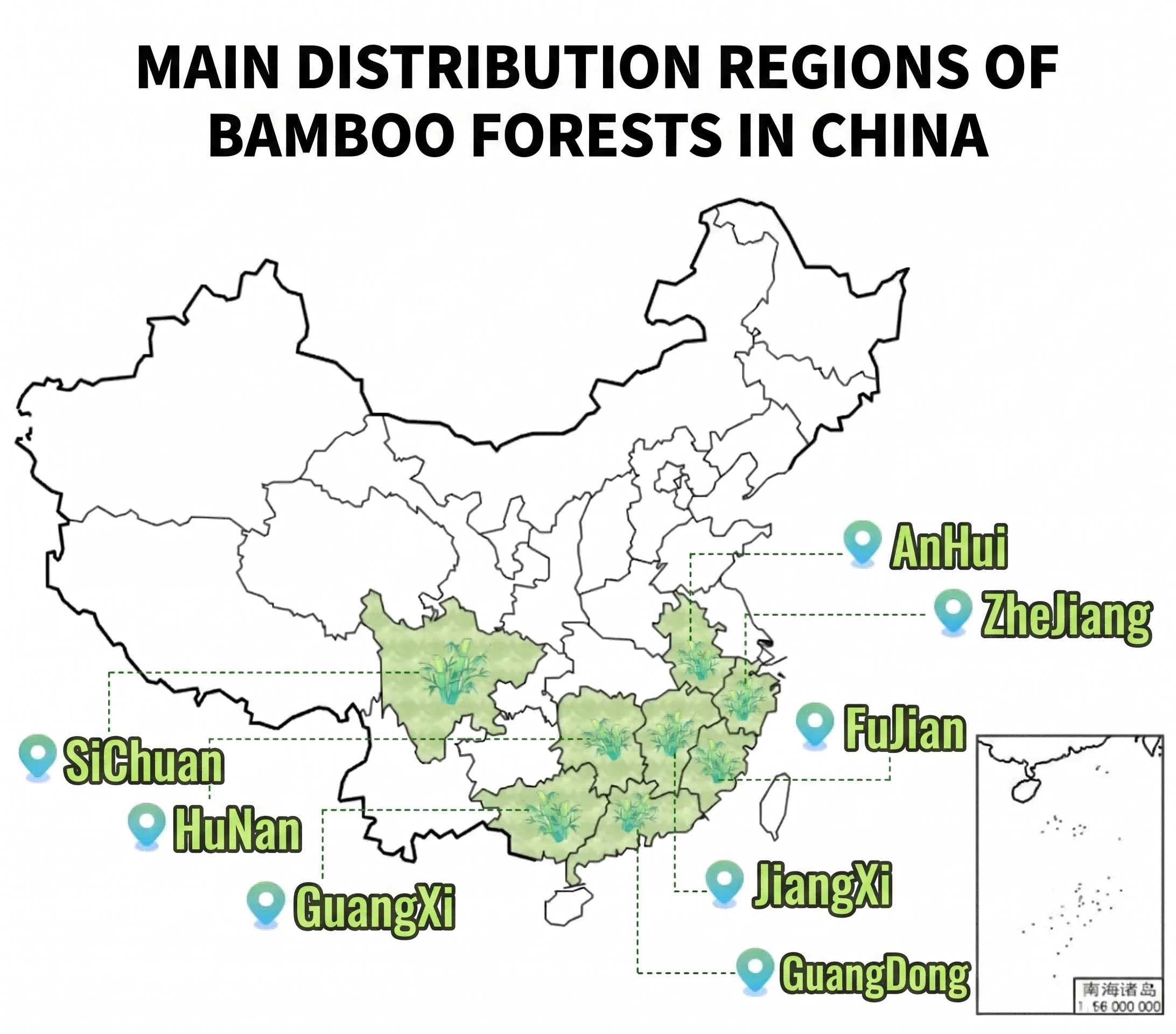
GBL Bamboo supplies bamboo and natural-fiber fencing from Huaiji, Guangdong, the origin of Tonkin bamboo, plus Anhui bamboo rolls and a range of willow, fern and bark products. Every batch goes through an 8-10 hour steam heat treatment and moisture is stabilized below 15% to prevent mold during transit.
We ship FOB Yantian with mixed container loading and OEM labeling available. Contact our team at sales@gdbamboo.com.cn or via www.gdbamboo.com.cn to request the 2026 digital catalog and free sample kits.