.png)
In this article
Bamboo Stake Size Guide: Diameter & Length by Crop
Bamboo stake sizes decide whether your plants stand tall or flop over by midsummer. Pick a pole that is too thin and it bends under the first heavy fruit. Pick one too short and the plant outgrows it in weeks. Get the size right and bamboo stakes hold steady season after season. This guide maps diameter and length to different crops, so you can order the right poles the first time.
Size matters at every level of the trade. Home gardeners want stakes that last. Distributors want a range that sells without dead stock. Landscape contractors want consistency across large projects. The good news is that bamboo stake sizing follows simple patterns. Learn those patterns and the choice becomes straightforward.
Why Bamboo Stake Sizes Matter
Two numbers define any bamboo stake: diameter and length. Diameter controls strength. Length controls support height. Ignore either one and the stake fails, no matter how good the bamboo is. A 6 mm pole simply cannot carry a loaded tomato vine. A 1.2 m pole cannot brace a 2-meter sunflower. Matching both numbers to the crop is the whole game.
How Bamboo Stake Sizes Are Measured
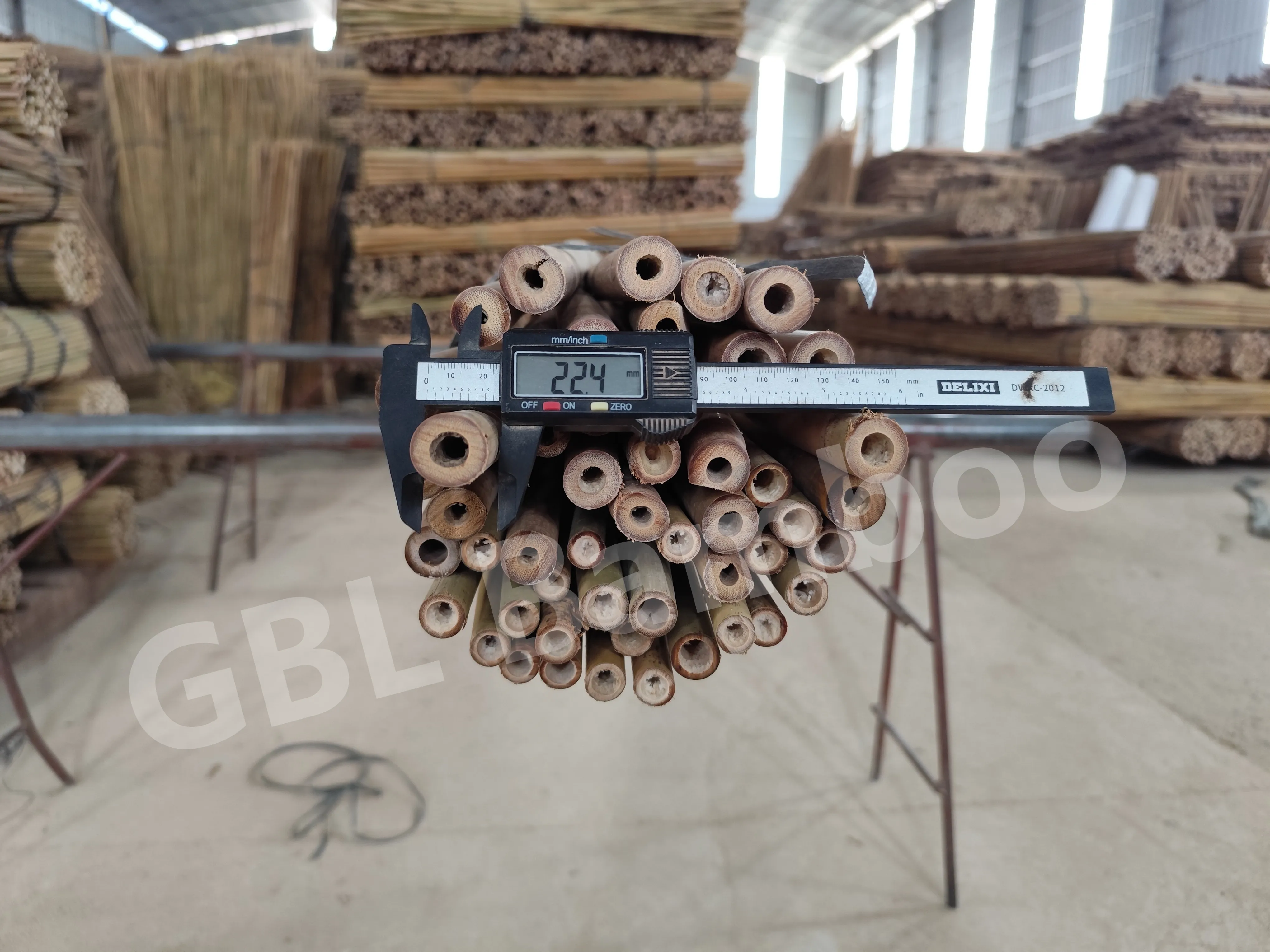
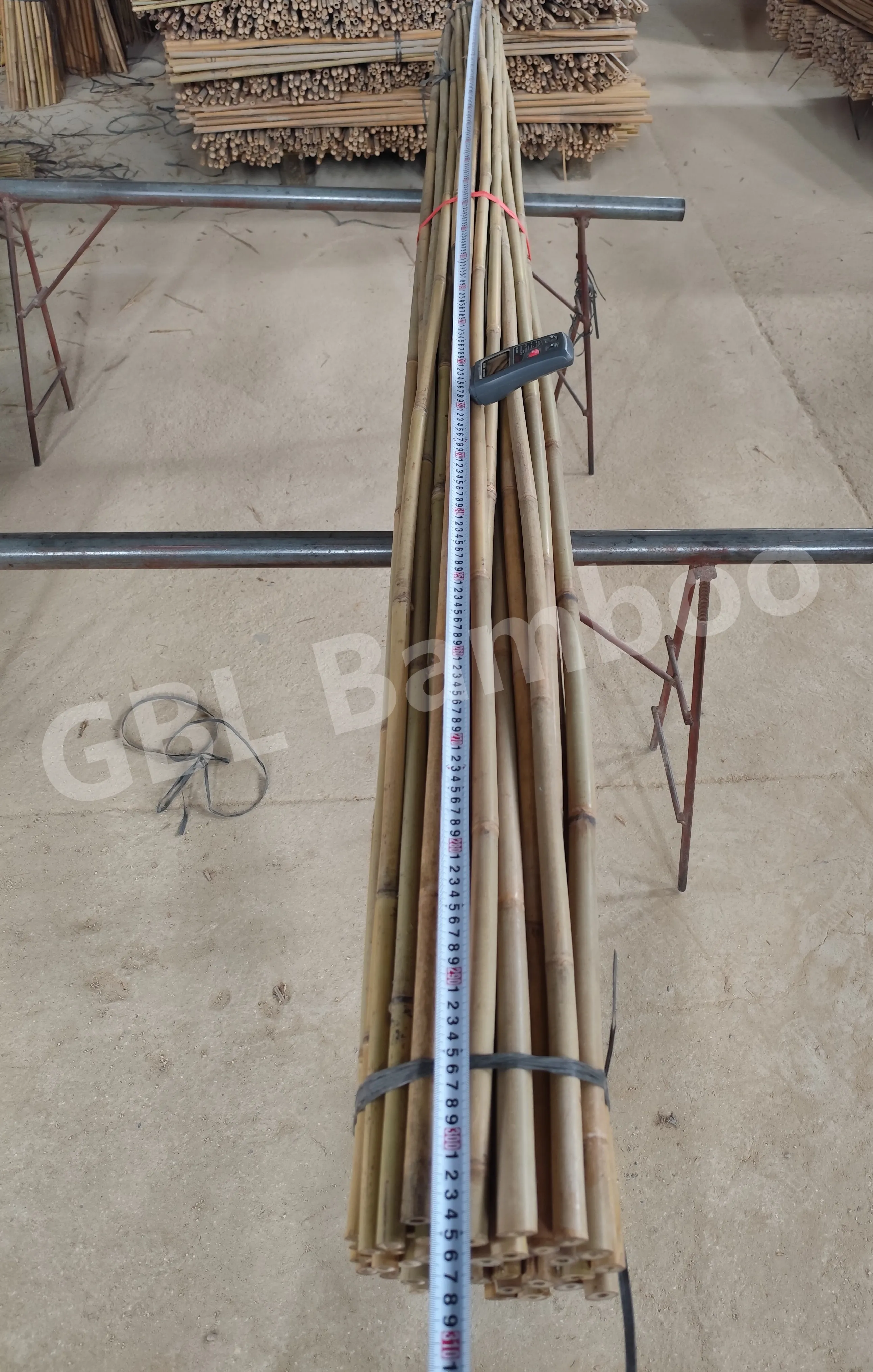
Diameter is measured in millimeters across the pole. Common ranges start at 4 mm for the lightest jobs and go up to 25 mm for heavy timber stakes. Length runs from 30 cm bundles for seedlings to 3-meter poles for tall climbers. A spec such as 10-14 mm x 1.8 m means the pole runs between 10 and 14 mm thick and stands 1.8 meters tall. That pair of numbers is the entire sizing system.
Bamboo Stake Sizes by Crop
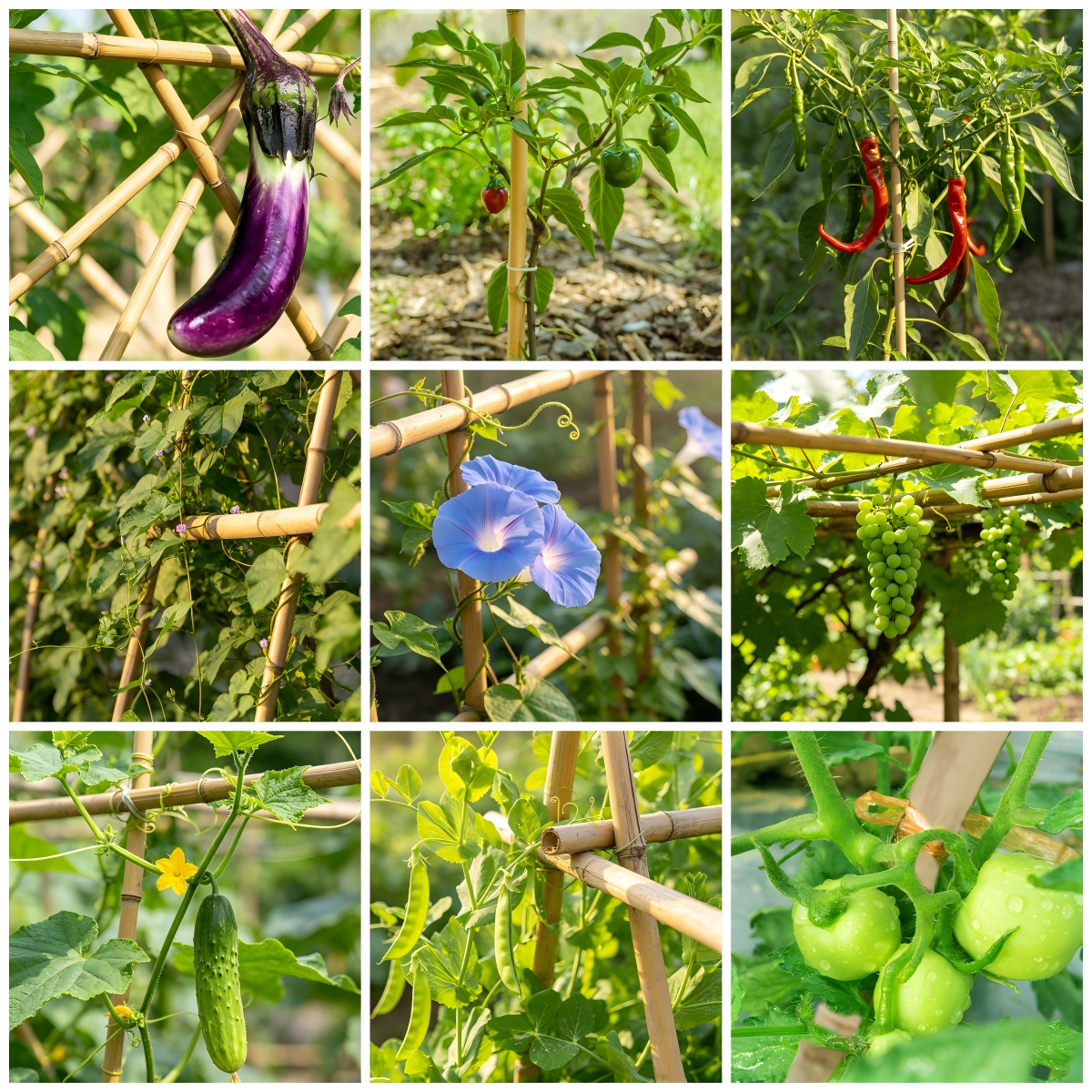
Different plants put different demands on their supports. The table below shows the sizes that work best across the crops gardeners grow most often. Use it as a starting point, then adjust for local wind and soil conditions.
|
Crop |
Diameter |
Length |
Notes |
|
Tomatoes (indeterminate) |
10-14 mm |
1.8-2.4 m |
Bamboo stakes for tomatoes: most requested size |
|
Pole beans, peas |
8-12 mm |
2-2.5 m |
Climbers pull from all sides |
|
Dahlias, sunflowers |
8-10 mm |
1.2-1.5 m |
Top-heavy blooms catch wind |
|
Peppers, eggplants |
6-8 mm |
0.6-1 m |
Light support, sells as multi-packs |
|
Young trees |
15-25 mm |
1.5-3 m |
Windward side, soft tie |
|
Grapes, cucumbers |
12-20 mm |
2-3 m |
Heavy vining crops |
Tomatoes: The Most Common Sizing Question
Bamboo stakes for tomatoes lead both online searches and retail best-seller lists. Indeterminate tomatoes keep growing all season and can pass two meters tall. They need poles around 10-14 mm thick and 1.8-2.4 m long, driven at least 20 cm into the ground. Determinate or bush varieties are lighter; 8-10 mm poles at 1.2-1.5 m usually do the job. If you stock only one tomato size, make it the tall indeterminate option.
Beans, Peas and Other Climbers
Pole beans, runner beans and tall peas climb rather than lean. They pull on the stake from several directions at once. Poles of 8-12 mm in diameter and 2-2.5 m in length give them room to grow without toppling. For heavy crops, push each pole deep and lash a crossbar across the top of the row for extra rigidity.
Dahlias, Sunflowers and Top-Heavy Blooms
Large flowers grow fast and get top-heavy. A dahlia head or sunflower disc catches wind like a sail, so the stake takes real lateral force. Poles of 8-10 mm at 1.2-1.5 m handle most of these. Anchor the tie just below the flower head as the plant grows, and add a second stake for the biggest specimens.
Peppers, Eggplants and Light Crops
Peppers, eggplants, herbs and young annuals need light support more than heavy bracing. Poles of 6-8 mm at 0.6-1 m keep them upright without crowding the plant. These smaller sizes are also the ones that sell best as multi-packs at retail counters.
Trees and Saplings
Young trees need stiff, straight supports that resist wind for several seasons. Use 15-25 mm poles at 1.5-3 m depending on the tree height. The pole should sit on the windward side of the trunk, with a wide, soft tie that will not cut into the bark. Check the tie each spring as the trunk thickens.
Diameter vs. Crop Weight: A Quick Rule
If you remember only one rule about bamboo stake sizes, use this. Light crops such as herbs and annual flowers take 4-8 mm poles. Medium crops such as tomatoes and peppers take 8-14 mm. Heavy crops such as young trees and grape vines take 15-25 mm. When a crop sits between two ranges, go up a step. A thicker pole costs a little more and never disappoints; a thin one fails at the worst moment.
Length Rules That Never Fail
Two rules cover almost every length decision. Rule one: the stake should reach about two-thirds of the plant's mature height. Rule two: plan 15-30 cm of the pole to sit in the ground, more in loose or sandy soil. Add the two together and round up. A stake that is slightly long is easy to live with; one that is short is useless.
How Distributors Plan Bamboo Stake Size Assortments
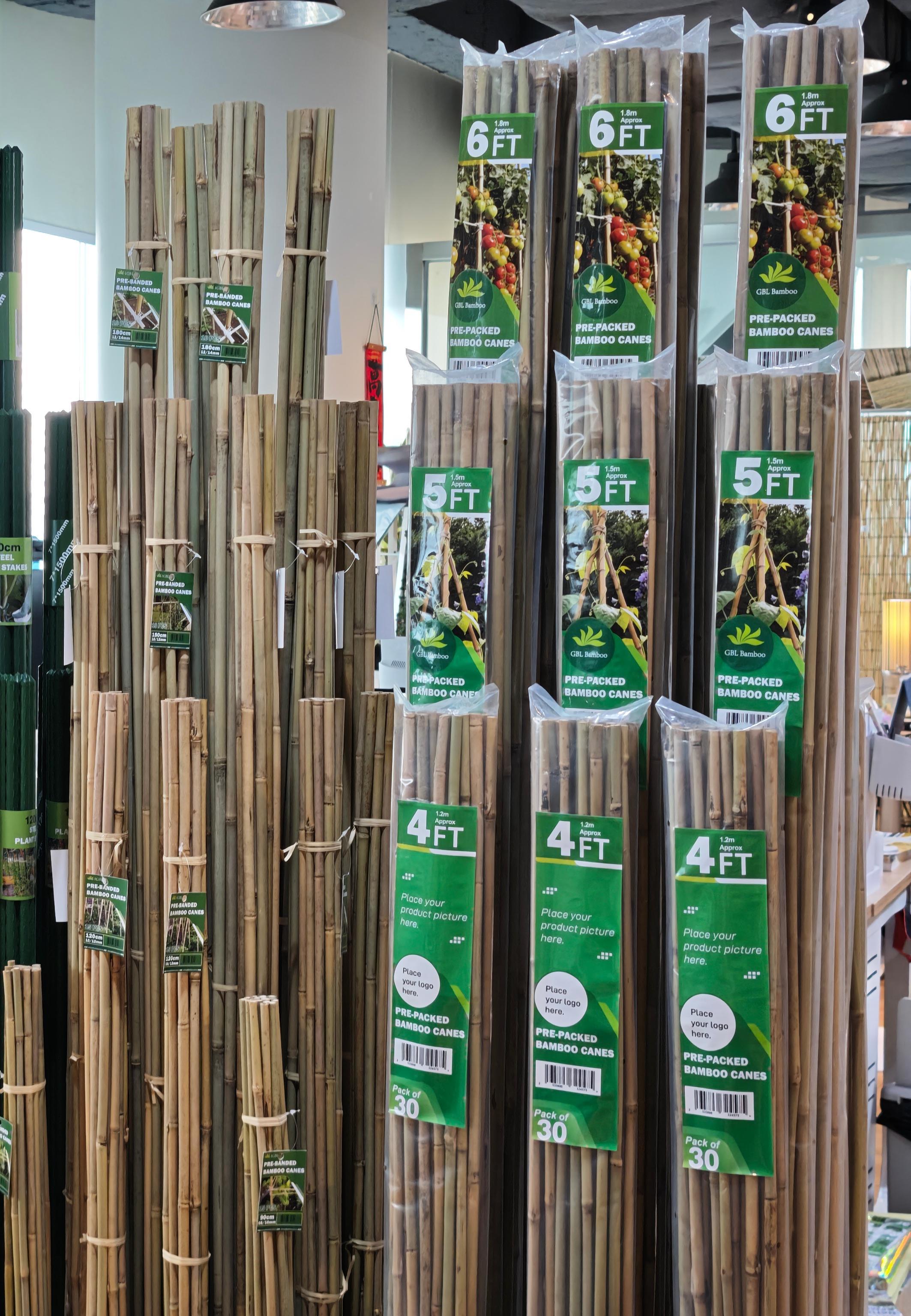
Most bamboo stake sales concentrate in a handful of sizes. Across European and US garden markets, the 1.2 m, 1.8 m and 2.4 m lengths in medium diameters cover the bulk of retail demand. Pre-packed bundles of 10 to 50 poles sell well at garden centers, where consumers favor ready-to-grab packs over loose poles.
A practical rule for distributors is to keep 60-70% of inventory in three or four core sizes and use the rest for specialty items. Track which sizes move fastest each season and adjust the mix. Sizes that sit unsold tie up warehouse space and capital, so a tight, well-chosen assortment beats a broad one every time.
Size Is Half the Story: Quality Comes Next
A correctly sized stake still fails if the bamboo itself is weak. Straightness matters first. A curved pole delivers support unevenly and looks poor in a retail display. Moisture content comes second. Bamboo with more than 15% internal moisture is prone to mold, warp and cracking once it ships. Thermal treatment, applied before export, locks in stability and drives moisture down to safe levels. These steps turn the right bamboo stake sizes into stakes that actually last.
Get the Right Bamboo Stake Sizes for Your Range
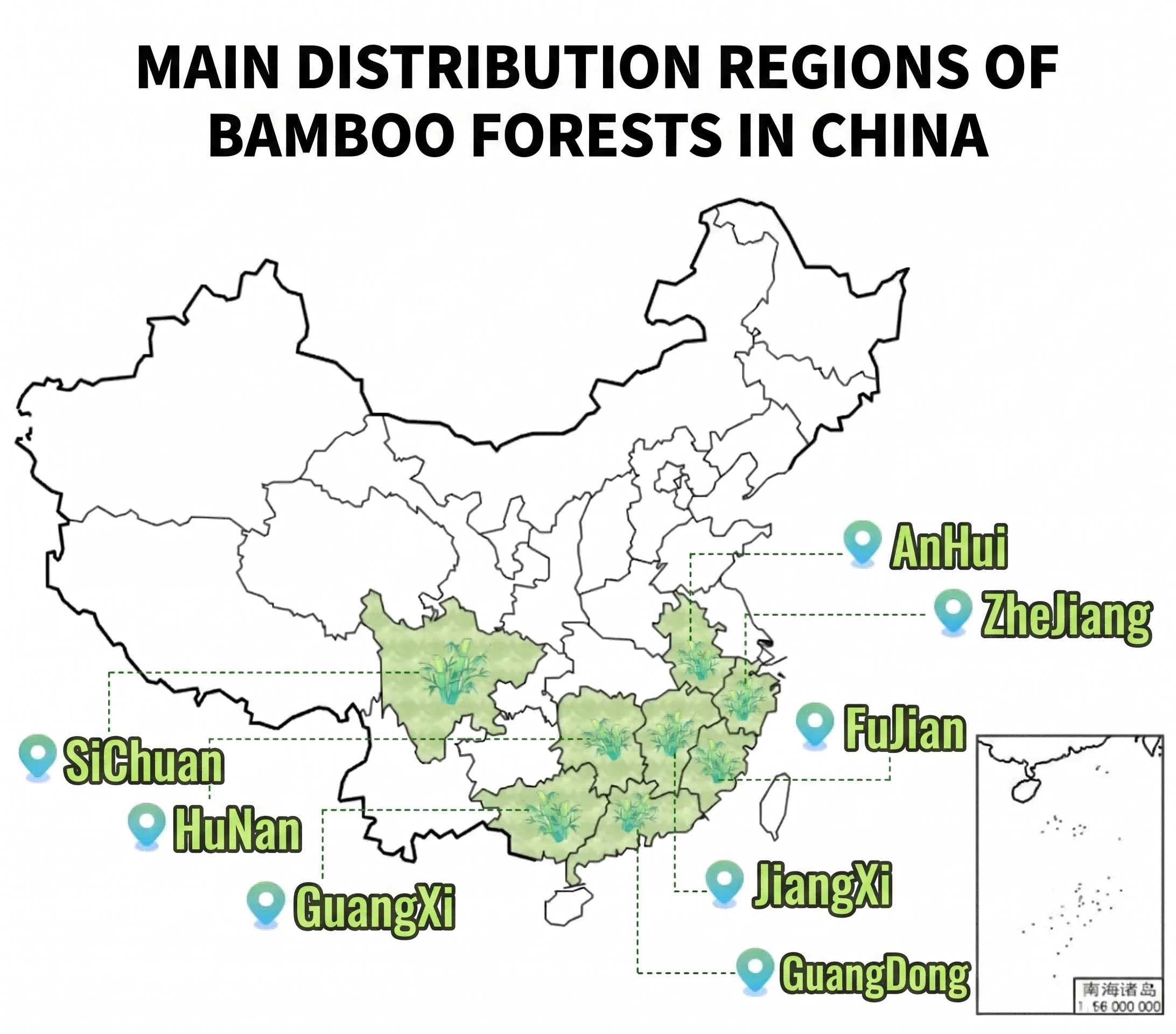
GBL Bamboo supplies bamboo canes from Huaiji, Guangdong, the origin of Tonkin bamboo, to distributors and garden centers across Europe and North America. Our canes are sorted by diameter, checked for straightness and thermally treated with moisture stabilized below 15%. For more background on bamboo as a material, the bamboo covers the plant family in detail.
Send us your crop list and target markets, and we will recommend the diameter and length mix that fits your customers. Samples and a full size chart are available on request. Contact our team at GBL BAMBOO or via sales@gdbamboo.com.cn.